
News from Learning Community 1
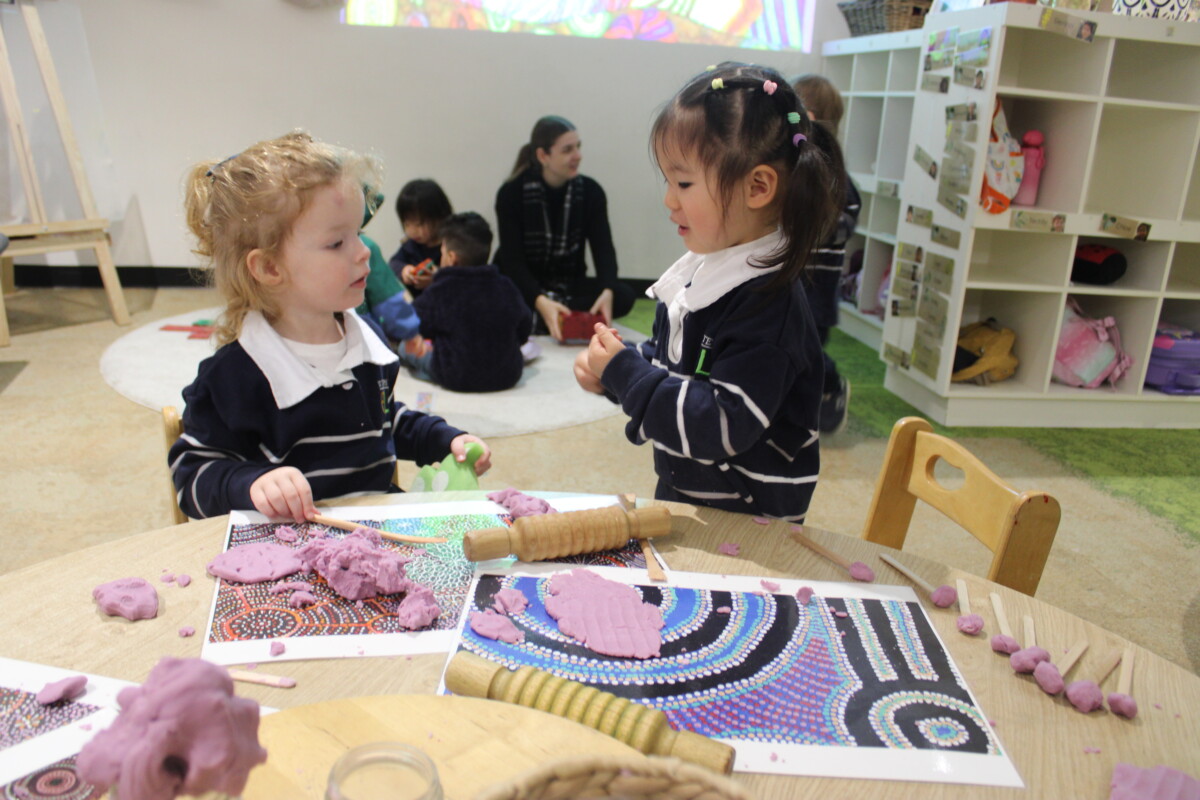
A very warm welcome to Term 3 in Learning Community 1! It has been wonderful to come together as a new group of learners over the past two weeks, welcoming new children and families and reconnecting with those continuing with us. We have embraced the cold and wet weather and have had a very cosy time indoors taking our time to get to know one another.
We understand that for many families this is the first time saying goodbye to their children as they are left in the care of someone outside of the family. It is a time filled with an enormous range of emotions. We wish to extend our gratitude in placing your trust in us as your children join our ELC. We feel extremely privileged to play a significant role in their lives as their social community grows. In our early weeks, we place emphasis on establishing a strong sense of belonging and a feeling of safety and connection as we navigate our days. We prioritise familiarising ourselves with our daily rituals as they bring predictability, comfort and a sense of fun to the day.
This term our Central Idea is ‘Wellbeing can Foster Care.’ As a Learning Community, we will explore what care looks like in the life of two and three-year-olds and as a new group of learners. Each morning in the Bell Yett and Stonyfell rooms, we share our Daily Acknowledgement, a statement that acknowledges the Kaurna People for sharing their land with us and our role in looking after it. The children consider our Acknowledge a ‘promise’ to care for the land, the people and the animals. Guided by this, we will unpack how we care for ourselves, each other and the physical environment at home and at ELC. Please engage with our Online Learning Page, documentation in the classrooms and through conversation with educators to keep up to date with our growing understandings of care.
We wish to also remind you of our upcoming Learning Community 1 Teaching and Learning Evening held on Wednesday 6 August at 6.30pm. Presented by the teachers, this evening goes into depth about our guiding principles and how we plan for and implement learning in the classroom. We hope to see you there.
Annabelle Redmond, Nell Tierney and Kathy McCabe
Learning Community 1 Teachers
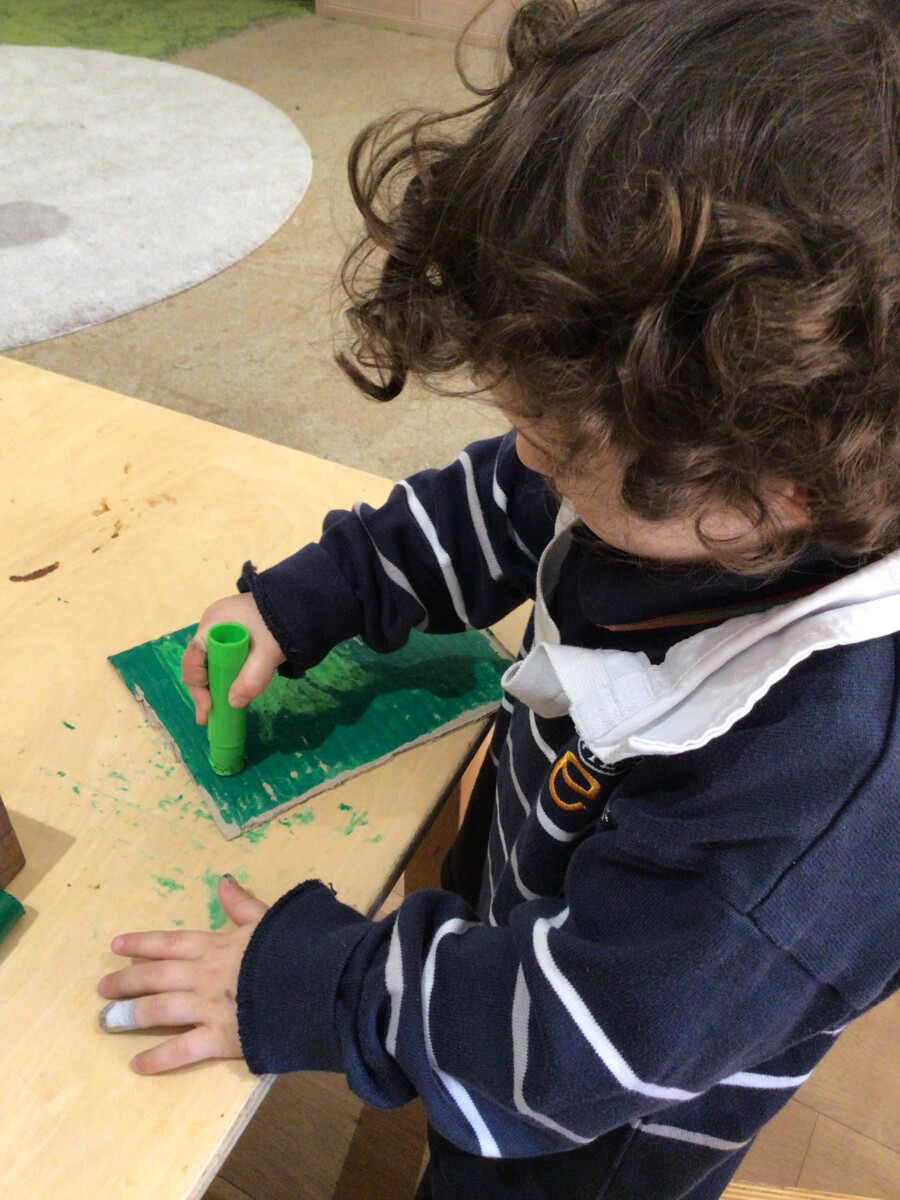
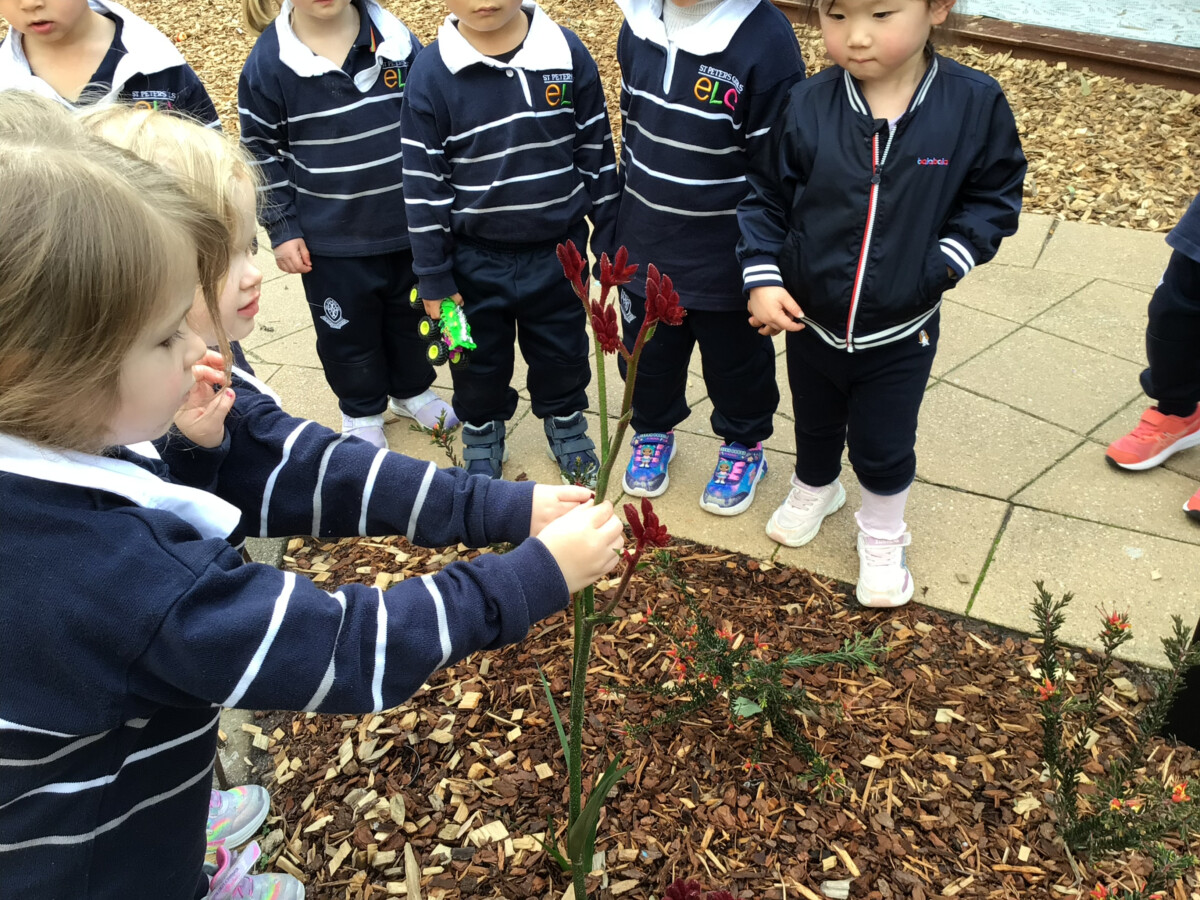
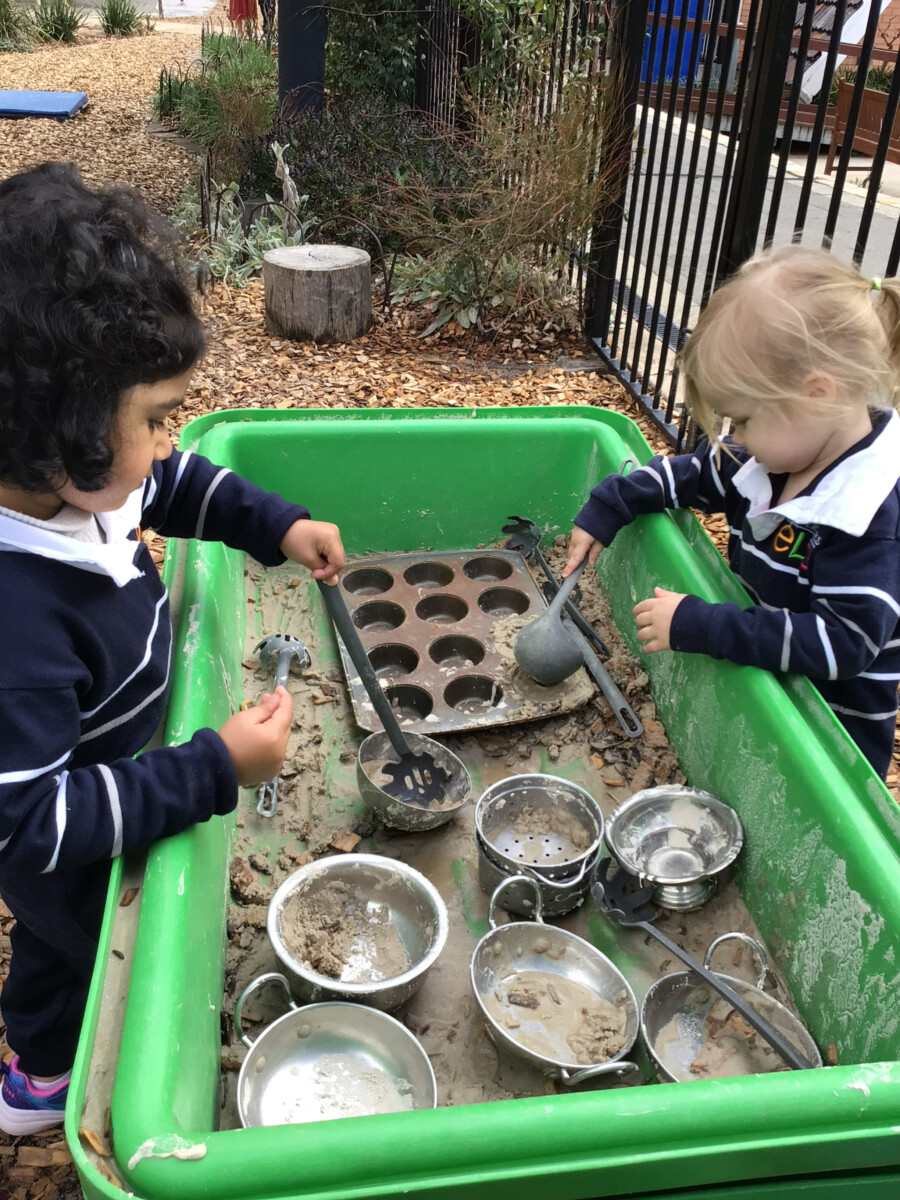
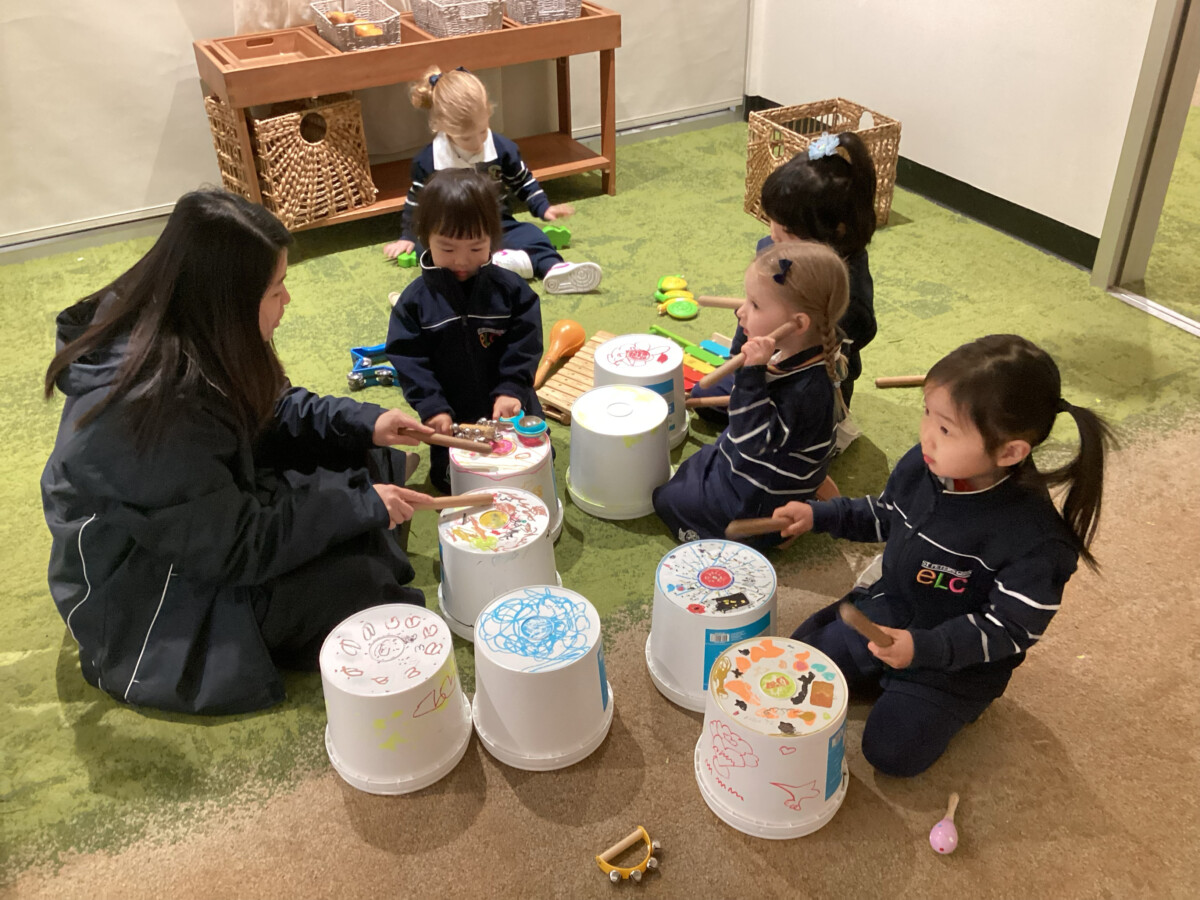
Wellbeing Can Foster Care
“Note that care as an ethic is both about what we do and about a certain sensibility; and it should pervade everything we do and cover all relationships – to ourselves, to others and to our planet. Care as an ethic, as a relational ideal, moves us well away from a narrow view of care as simply a bundle of tasks that can be commodified and traded.” – Prof. Peter Moss, University College London
This year, our Central Idea each term has focused on children’s wellbeing, reflecting our commitment to providing a welcoming, nurturing environment in which children can learn and thrive. Research consistently demonstrates that secure relationships and a strong sense of belonging are integral to healthy brain architecture, wellbeing and a foundation for social and academic learning.
In Term 3, we continue to explore these concepts through our Central Idea ‘Wellbeing can foster care’. The word ‘care’ can carry negative connotations in the context of early education, conveying children as passive, vulnerable recipients of adults’ passive supervision. However, when considered more deeply, care can be redefined as an active, reciprocal process of connecting, guiding and ethical responsibility. When we position ourselves alongside children, we no longer simply care for them, but also with them. In this context, children are supported to care for themselves, their peers, and their world.
Professor Peter Moss explains the importance of care in early childhood policy. Children have a fundamental right to care – comprising safety, wellbeing, and development – in accordance with the United Nations Convention on the Rights of the Child. However, care is not simply support and attention, but rather an ethic of “attentiveness, responsibility, competence and responsiveness” we employ (Moss, 2017). This ethic of care pervades every relationship, action and decision we engage in and foster as a Centre. Children are bearers of rights rather than needs, and educators are co-constructing learning and development, rather than merely providing supervision and family substitution.
A core component of the Reggio Emilia educational philosophy is the image of the child as competent and capable, rather than recipients of knowledge. By positioning children as protagonists and citizens, we are honouring their innate potential to care for themselves, their peers and their environment. Our teaching team recently attended and presented at the international Reggio Emilia Conference in Adelaide, where the keynote speakers emphasized the importance of the ‘language of care’. When we are careful with our words, materials and learning provocations, we convey their value and importance, inviting children to do the same.
This also supports our key values of sustainability and connection to Kaurna culture. Our morning Banbanbalya (meeting) not only provides children with a sense of belonging as they welcome one another and acknowledge the land we meet on, but also the opportunity for stewardship. The children are invited to live our acknowledgement of Country, fostering understanding and respect for their surroundings, both inside the ELC, in Ferguson Park and far beyond. We know that nature engagement and connection is a powerful contributor to children’s wellbeing and maintained as a lifelong preference when established in the early years. Our connection to Ferguson Park facilitates this reciprocal caring relationship between the children and the land on which they learn and play.
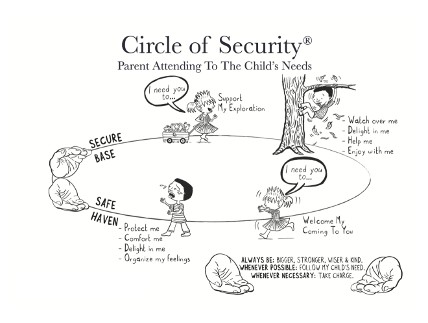
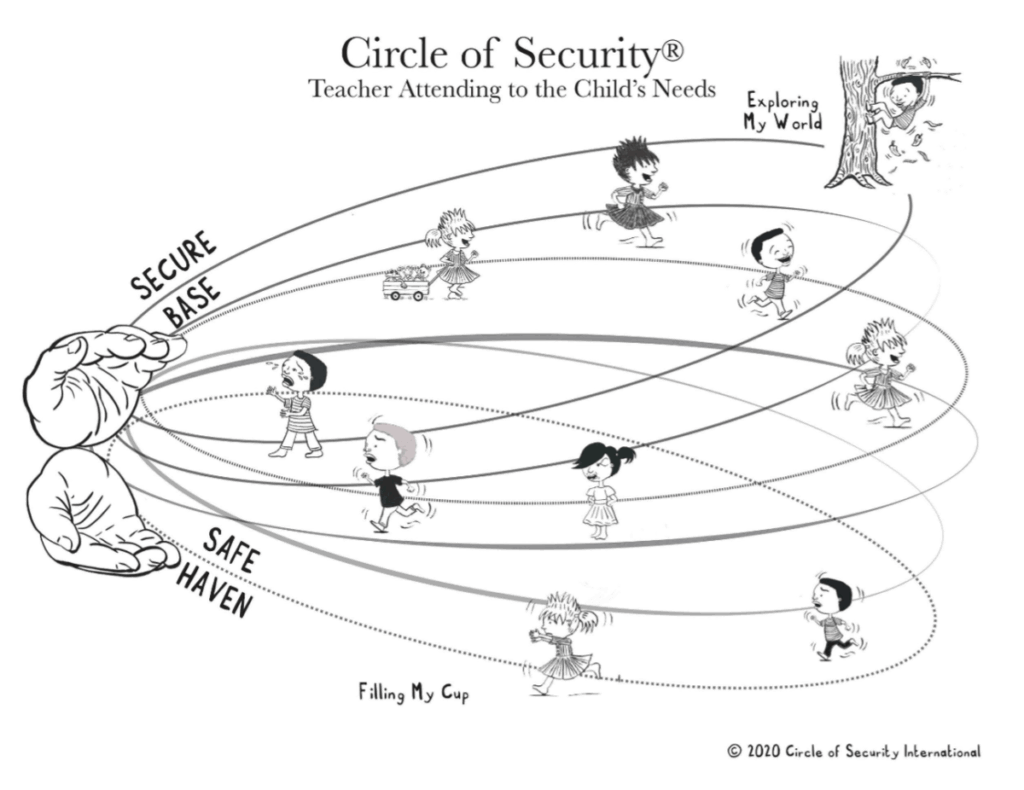
As part of our whole-ELC approach to wellbeing, we are implementing the Circle of Security (COS) framework across our centre. Like the Reggio Emilia approach, this framework emphasises the central role of secure, responsive relationships and care in early childhood development. Grounded in attachment theory, COS deepens caregivers’ understanding of children’s emotional needs. It highlights the need for children to establish a secure base from which they can confidently explore their world. When a secure attachment is established between a child and their caregiver, they are comforted and emboldened by the knowledge of having have a safe base to return to after investigating, taking risks and experiencing setbacks. It is therefore this initial dependence on their caregiver that enables a child’s independence; dependence and attachment foster independence and detachment.
Beginning this term, staff will engage in the COS Classroom Approach professional learning over the next ten months. One of our parent representatives has also organized a COS Parenting Program, which all Erindale Parents and Carers are invited to attend. This will be held over two sessions in August, run by Jayne Pigou from the Adelaide Mums and Bubs Clinic in Rose Park. This wonderful initiative provides such a valuable opportunity for our families, and represents a meaningful step in building a strong, connected community. Research into early brain development consistently highlights the importance of responsive, reciprocal relationships in shaping children’s emotional wellbeing and lifelong learning outcomes. Together, we are ensuring learning environments rooted in care, connection and wellbeing.
Monique Gannon
Wellbeing Leader and Ferguson Room Teacher
References
Moss, P. (2017). ‘What place for ‘care’ in early childhood policy?’ in L. Miller, C. Cameron, C. Dalli & N. Barbour (eds.) The SAGE Handbook of Early Childhood Policy (pp. 256-267). London: Sage.
ELC Teaching and Learning Evening
Dear Families,
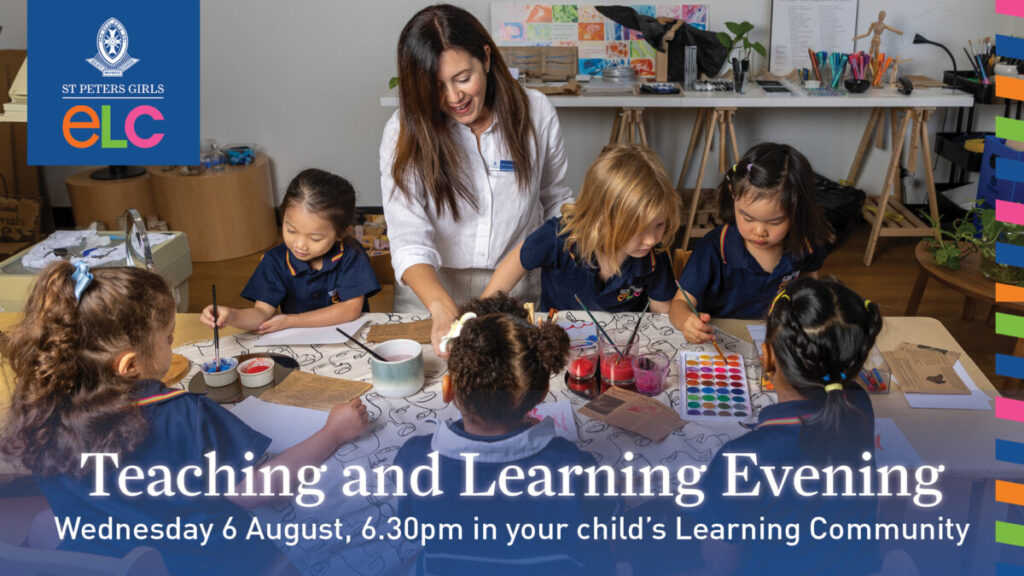
We warmly invite you to our Teaching and Learning Evening at the ELC.
This will be an opportunity for you to visit your child’s room to see the environment and gain a better understanding of the teaching and learning within our ELC context. Parents and guardians will also hear a presentation from the teaching team about how we plan and implement our units of inquiry.
As this is a formal presentation, we recommend parents/guardians only attend this event. Please also note this event is for all families, excluding families and children in the Erindale room.
Wednesday 6 August at 6.30pm, in your child’s Learning Community at St Peter’s Girls’ ELC
Warm regards,
Liz Schembri
Director of Early Learners’ Centre
National Science Week
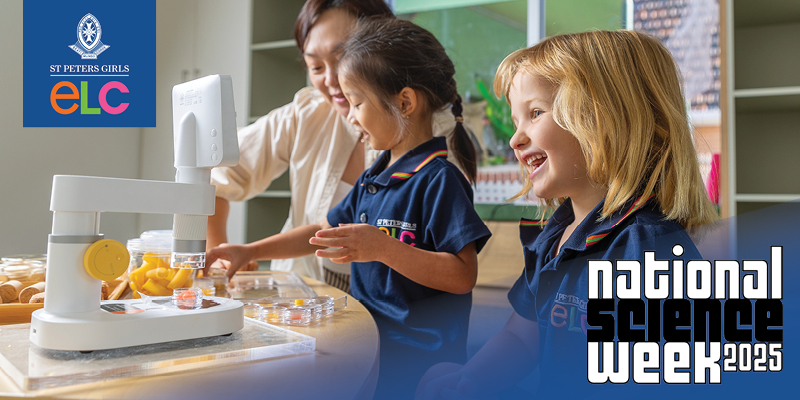
Get Ready for National Science Week 2025: Decoding the Universe!
From Monday 11 to Friday 15 August, the ELC will be buzzing with excitement as we celebrate National Science Week, an annual celebration that highlights the wonders of science and technology. This year’s theme is, ‘Decoding the Universe – Exploring the Unknown with Nature’s Hidden Language.’
A Week of Wonder at St Peter’s Girls’ ELC
At St Peter’s Girls’ ELC, we’re diving into this celebration with hands-on activities led by our very own STEM Innovation Leader, Melissa Lee. Melissa has carefully curated an array of exciting, interactive experiments and projects designed to ignite curiosity in our youngest learners. From Monday through Friday, children in Learning Community 1 and Learning Community 2 will explore the world of science.
Families are invited to join in the fun and exploration! On Thursday 14 August and Friday 15 August, from 3.30 to 5.30pm, the ELC will be hosting ‘Decoding the Universe: A Piazza of Possibilities.’ This unique event will provide both children and families the chance to experience the mysteries of science together.
Exciting Activities to Explore
There will be no shortage of fun, engaging, and educational experiences for you to engage in with your child in the Piazza of Possibilities. Here’s a sneak peek at what’s in store:
- Tracing the Dance of Invisible Forces
- Decoding Nature’s Reactions
- Ozo Bots
- Ada the Robot
We can’t wait to celebrate National Science Week with our ELC and community, engaging in an array of activities designed to make learning not just educational but thrilling and unforgettable!
Melissa Lee
STEM Innovation Leader
ELC Book Week Parade – Save the Date!
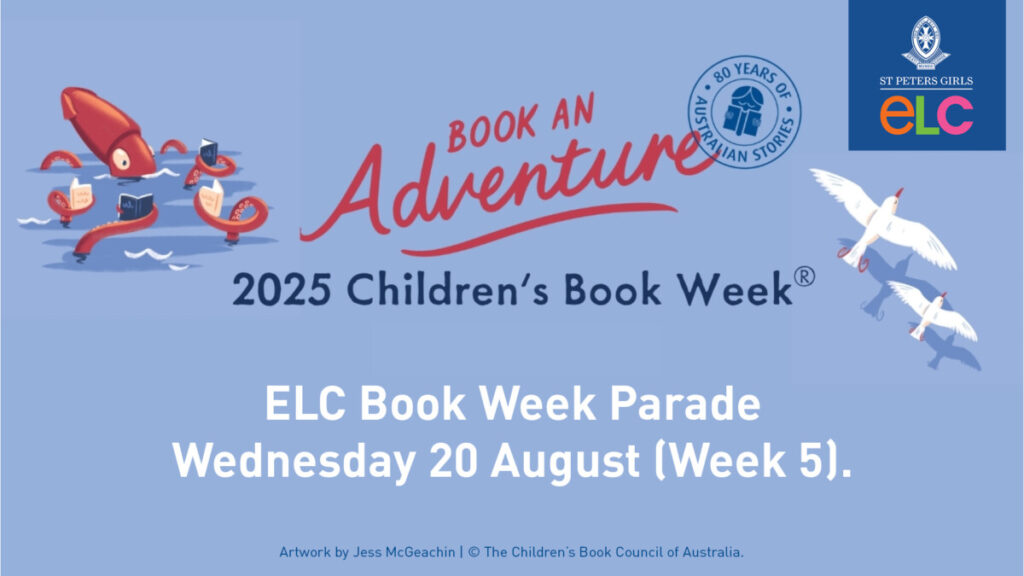
To Families,
The ELC Book Week Parade will be held on Wednesday 20 August (Week 5). This year’s theme is Book An Adventure.
Book Week is an exciting time for our youngest learners as it celebrates the magic and significance of reading and storytelling. Books transport children to new worlds, fostering creativity and imagination. They play a crucial role in supporting language, cognitive, social, and emotional development, laying the foundation for early literacy and instilling a lifelong love of reading.
All children are invited to dress up as their favourite book character for the Parade!
The Parade will commence at 9.30am on the Chapel Path, behind the ELC in the School followed by a shared story time. Please ensure your child is signed in and dropped off at their class by 9am if they are attending on the day of the Parade. If your child does not usually attend on this day, they are still welcome to participate in the Parade; however, due to staffing requirements, you will need to stay and take your child home afterwards.
Families and treasured friends are warmly invited to join us and enjoy the Parade. To help us celebrate our Book Week Parade, a coffee van will be available to enjoy a complimentary coffee to mark this special occasion.
We kindly ask that families:
- Avoid bringing hot drinks into the ELC.
- Do not exit through the ELC after the event to ensure the safety of all children. Instead, please exit via the School path that runs alongside the Chapel and leads to Hallett Road.
- Please note that babycinos will not be available due to allergy considerations.
There will be books available for your family to purchase as a donation for the ELC. Your family’s name will be featured on the inside cover of the book to remind us of the special gift and your ongoing support of our community.
We look forward to seeing you at the Parade and celebrating the magic of reading together!
Warm regards,
Liz Schembri
Director of ELC
Artwork by Jess McGeachin | © The Children’s Book Council of Australia.
Parent Representatives for Semester 2, 2025
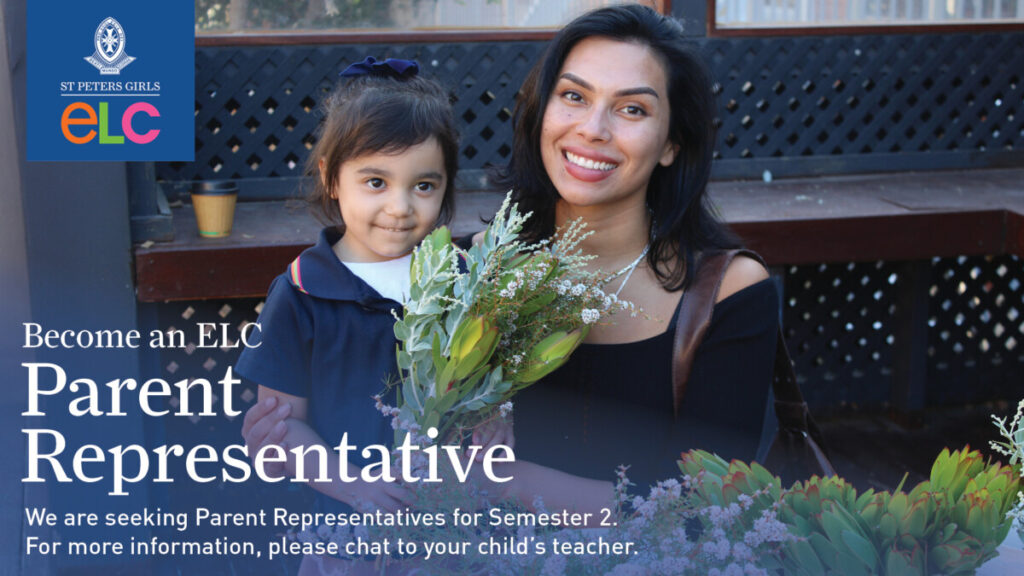
Would you like to help shape and strengthen our vibrant ELC community?
We are currently seeking Parent Representatives for each class for Semester 2, 2025. This is a wonderful opportunity to support your child’s learning community, connect with other families, and help foster a warm, inclusive environment.
We warmly welcome more than one representative per room, as this provides a fantastic support system and allows responsibilities to be shared.
As a Parent Representative, you will:
- Be a key point of contact for families in your child’s class and help create a welcoming and connected atmosphere.
- Assist with and promote events – and if you’re interested, even help organise an event or activity for your class. Our Communications and Community Relations team will support you with promotion, logistics, and planning.
- Stay informed about school initiatives and current events, helping to spark meaningful conversations across our community.
- Attend brief meetings twice per term, with flexibility to rotate if your class has more than one representative.
We truly value the contribution of our Parent Representatives and look forward to working together to build a strong, engaged community. If you are interested or would like to learn more, please speak to your child’s teacher.
We hope you’ll consider getting involved; we’d love to have you on board.